
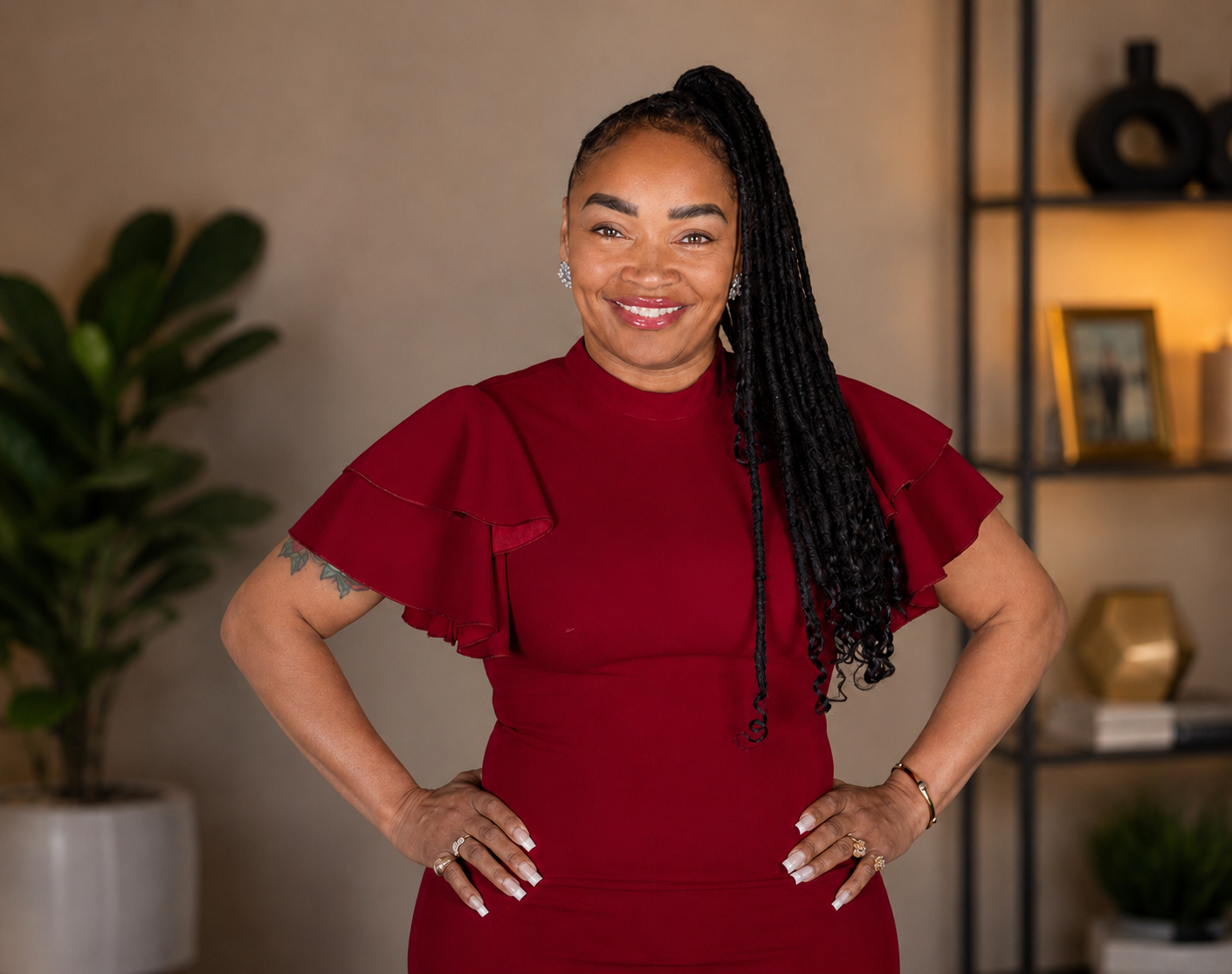
Latoya Wilson is a community impact leader, systems strategist, and founder of the E7 Hope to Transformation Model, a people centered leadership and systems framework that helps leaders, organizations, and communities transform hope into lasting change through intentional people development, stronger systems, and sustainable action.
Her work is grounded in a defining belief:
No help is coming. We are our own help.
Latoya believes communities are transformed when people stop waiting to be rescued and begin building the leadership, systems, and relationships needed to create lasting change. She affirms that hope is not passive. Transformation is intentional.
With leadership experience spanning violence prevention, community engagement, workforce development, social services, and organizational strategy, Latoya has built a reputation for translating complex community challenges into practical, scalable solutions that create measurable impact. Her work bridges frontline practice with systems level leadership, focusing on developing people, strengthening organizations, and transforming the conditions that shape community outcomes.
At the center of her work is the E7 Hope to Transformation Model, a leadership and systems framework she developed to help individuals, organizations, and communities intentionally build the conditions where transformation can occur and be sustained. Grounded in the belief that people do not simply need access to services but opportunities for intentional development, the framework equips leaders to strengthen people, systems, and communities together.
Her work challenges organizations and communities to stop asking how to better manage problems and start asking how to better develop people.
Latoya holds a Master of Social Work with a concentration in Community and Organization from Saint Louis University, a Bachelor of Social Work, Cum Laude, from the University of Missouri–St. Louis, an Associate of Applied Science in Human Services, and a Certificate in Addictions Studies from St. Louis Community College. Drawing from interdisciplinary training, professional leadership, and personal experience navigating adversity, she brings a perspective that bridges social work, organizational leadership, systems thinking, and community practice.
Latoya’s work continues to shape conversations around violence prevention, justice reform, reentry, leadership development, organizational effectiveness, and community based public safety. She believes transformation begins with hope, but hope alone is never enough. Lasting change requires intentional leadership, stronger systems, and people who are willing to invest in one another.
Because transformation is not a moment. It is a process we build and sustain.